


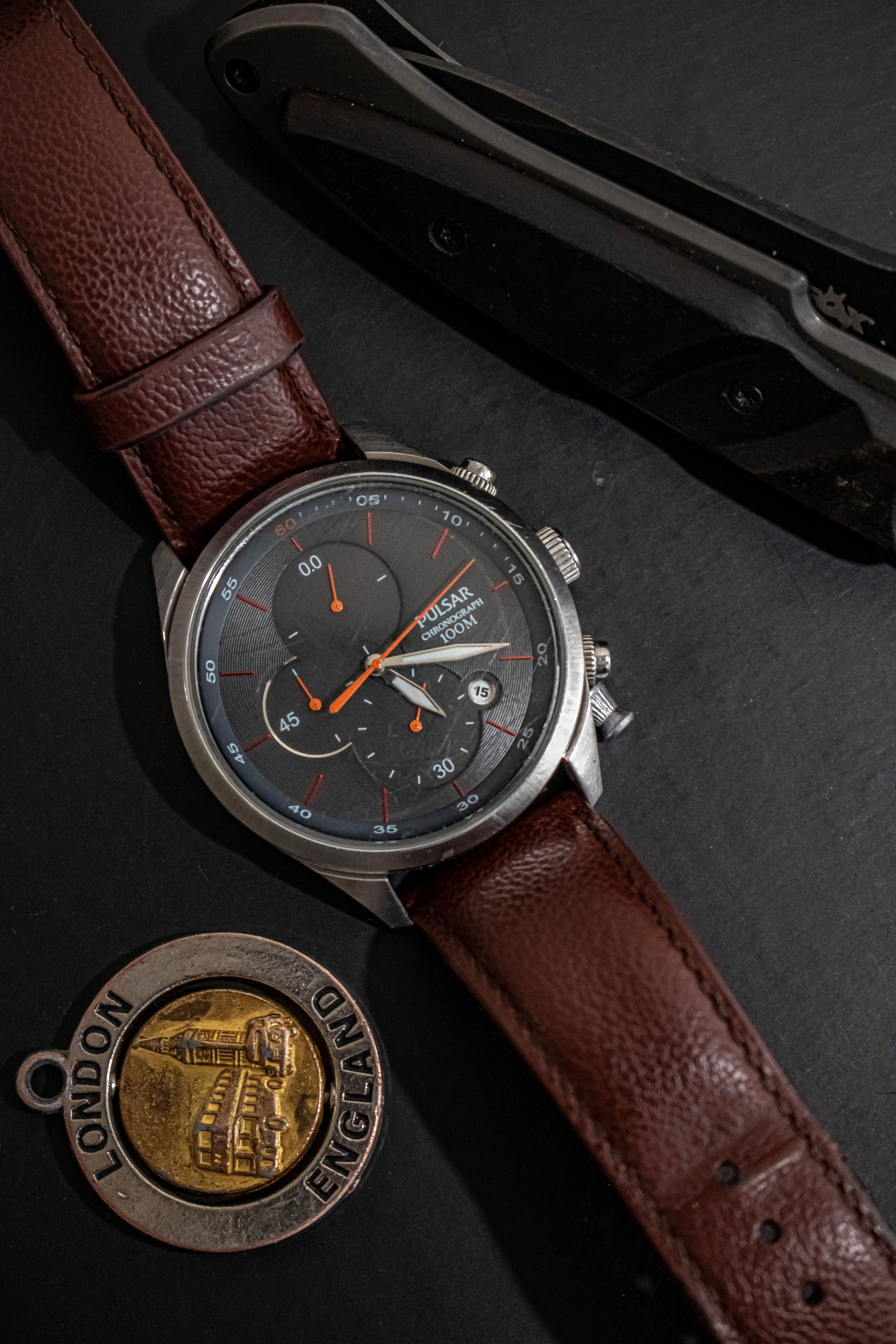
 Full-grain leather begins as a living map. Its grain stays intact, with pores and scars unpolished away. That surface is not a flaw. It is the part that can evolve. In a watch strap, the transformation is accelerated by daily contact: heat, humidity, friction, and skin oils. Over months, the leather deepens in colour, gains lustre, and softens around the wrist. That change is patina, and it is most convincing when the leather starts honest.
What is patina on a leather watch strap, and why does it matter?
Patina is the gradual darkening, sheen, and softening of leather caused by light exposure, friction, skin oils, and moisture. On a watch strap, patina matters because it records wear in a controlled way, improving comfort and visual depth. Full-grain, vegetable-tanned leathers show it most clearly.
Patina is not “damage”. It is a designed outcome.
A strap that patinates well does two things at once. It becomes more personal. It also becomes more coherent, because the strap and watch begin to look like a single object with shared time.
Patina is often discussed as colour change. That is only one layer. The more telling layer is surface character. A good strap gains a gentle glow rather than a glossy coating. It looks quieter, not louder.
Which leathers develop the best patina for a watch strap?
Patina is easiest to build when the leather remains close to its natural structure and finish. That is why full grain leather watch strap searches often correlate with patina intent. Still, “full-grain” is not enough on its own. Tannage and finish decide the pace and clarity of change.
1) Vegetable-tanned full-grain leather (the classic patina leather strap)
Vegetable tanning leaves the leather more receptive to sunlight and oils. This is the most recognisable path to a patina leather strap with warm darkening and visible gradients.
What to expect:
- Faster colour shift, especially on natural or tan shades.
- Gradual gloss on high-contact areas.
- More sensitivity to water spots early on.
Best for:
- Daily wear in moderate climates.
- Owners who enjoy visible evolution.

2) Bridle leather (patina with discipline)
Bridle leather is typically veg-tanned, then “hot stuffed” with waxes and oils. It often begins with a subtle surface bloom, then settles into a dense, polished look.
What to expect:
- Slower, more even darkening.
- High resistance to casual scuffs.
- A refined sheen rather than dramatic colour swings.
Best for:
- Dress watches and controlled outfits.
- Those who want patina, but not unpredictability.
- Relevant query: bridle leather watch strap.
3) Pull-up leather and oil-wax leathers (patina with movement)
Pull-up leather redistributes oils when bent. It changes tone with pressure, then partially returns. Over time, it develops depth, not just darkness.
What to expect:
- Immediate tonal variation from bending.
- Strong “used well” character.
- More visible handling marks, usually attractive.
Best for:
- Field watches and casual rotation pieces.
- Relevant queries: pull-up leather watch strap, Crazy Horse leather strap.
4) Horween-style heritage leathers (patina with narrative)
Certain heritage tanneries, including Horween, are sought for consistent tanning and deep oil content. The result is patina that feels earned, with darker edges and a settled glow.
What to expect:
- Rich colour migration.
- A “layered” finish that looks deeper each year.
Best for:
- Collectors who track wear like a logbook.
- Relevant query: Horween leather watch strap.

5) Chrome-tanned, heavily finished leather (patina is muted)
Chrome tanning can still age, but it often ages by softening more than colouring. A strong topcoat blocks absorption and slows visible patina.
Choose it if:
- You prioritise stain resistance.
- You prefer a stable, uniform look.
Do not choose it if:
- Your goal is a high-contrast, story-rich patina.
How do vegetable-tanned straps age compared with chrome-tanned straps?
Vegetable-tanned leather is responsive. Chrome-tanned leather is stable. For a watch strap, that distinction affects not only appearance but behaviour in humidity.
Vegetable-tanned ageing profile:
- Darkens with UV and oils.
- Shows water marks early, then becomes more forgiving.
- Can feel firmer at first, then moulds to the wrist.
Chrome-tanned ageing profile:
- Colour remains closer to original.
- Surface stays consistent if the finish is strong.
- Often feels supple sooner.
If you are specifically searching for a vegetable tanned watch strap because you want patina, choose lighter starting colours. Tan, natural, and light brown record change more clearly than black.
What strap colour shows patina most clearly?
Patina is most visible where the strap has room to travel.
Recommended starting colours:
- Natural (unstained): the clearest evolution.
- Tan and light brown: warm, predictable deepening.
- Medium brown: subtler, still rewarding.
Less dramatic:
- Black: patina shows more as shine and edge wear than colour shift.
A practical note: very light straps can look uneven during the first weeks. That phase is normal. The tone usually resolves with time.
How does humidity affect patina, especially in Singapore, Hong Kong, and Taiwan?
Humidity changes the rules. In tropical or subtropical climates, leather receives more moisture, more sweat, and more frequent drying cycles. Patina can still be beautiful, but you must choose the right construction and rotate.
If you are effectively asking, “best leather watch strap for humid tropical climate Singapore”, focus on these traits:
- Dense fibre structure (bridle, well-finished veg-tan, select heritage leathers).
- Careful edge sealing.
- A lining choice that manages sweat.
Avoid:
- Extremely absorbent, unfinished surfaces for gym-level wear.
- Straps that stay wet for hours.
For very humid weeks, many owners alternate leather with nylon watch strap, Perlon watch strap, or FKM rubber watch strap, then return to leather once conditions ease. That is not disloyalty to leather. It is stewardship.
Which leather is best if I want patina without looking messy?
Patina is most elegant when it is guided.
Choose:
- Bridle leather for even darkening and controlled sheen.
- Medium-brown veg-tan for forgiving early wear.
- A smoother grain finish rather than a very open, raw surface.
Also choose:
- A strap width that suits the watch head. Overly thick straps exaggerate wear marks.
- Stitching that is tight and consistent. It frames patina like a border.
If your aim is “quiet luxury” rather than rugged romance, seek leathers that polish, not leathers that bruise.
How long does it take for a leather watch strap to develop patina?
Patina has phases. Each phase has a distinct look.
Typical timeline (daily wear, moderate care):
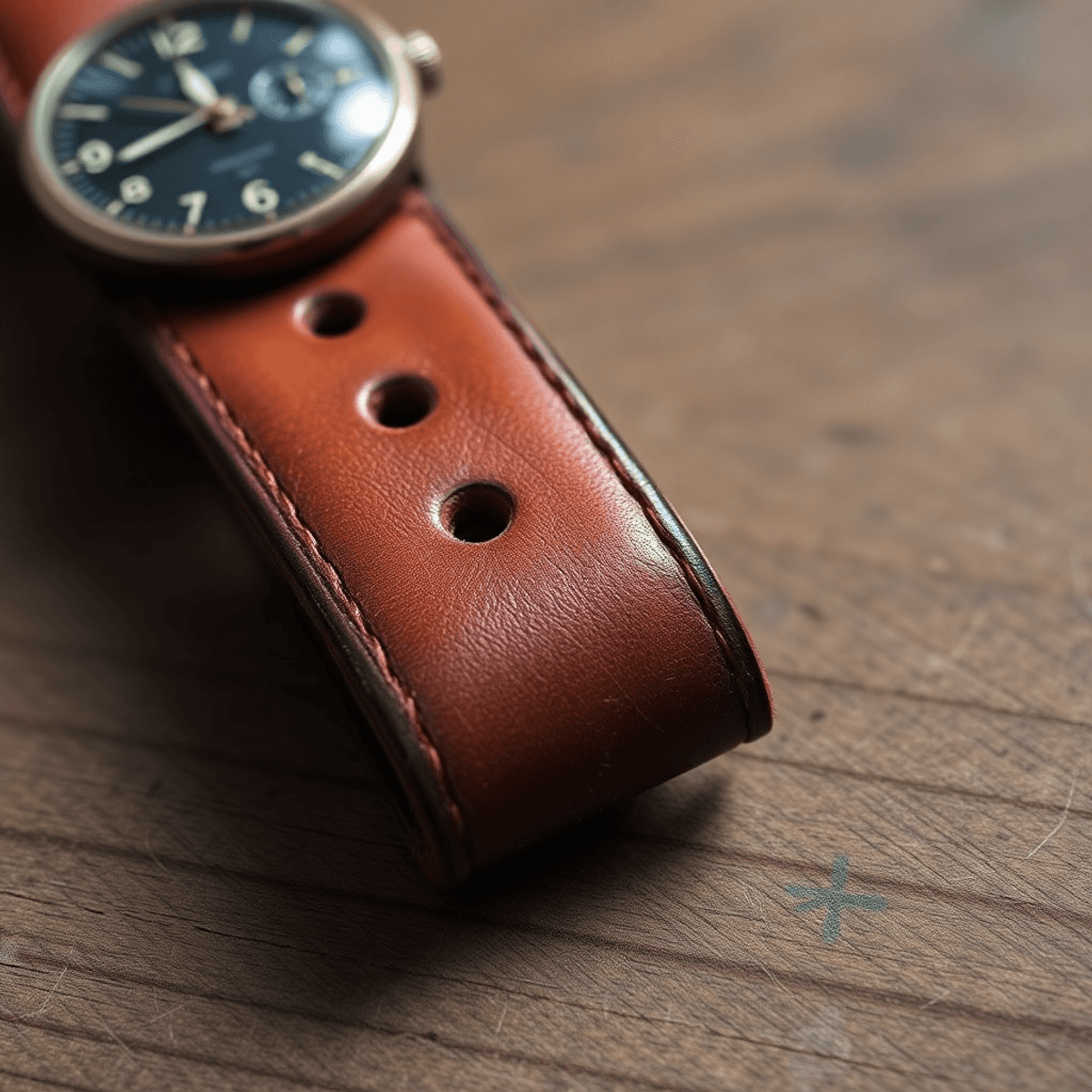
- Week 1–2: surface adjusts; early darkening at the holes and keeper area.
- Month 1–3: sheen forms on the underside edges and high-contact zones.
- Month 3–12: colour settles; strap softens; creases become graceful.
- Year 1+: the strap looks “owned”, not new.
Climate accelerators:
- High UV exposure speeds darkening.
- Higher sweat exposure speeds softening and deepening, but can increase odour risk if unmanaged.
How do I care for a patina leather strap without stopping patina?
Patina needs contact, but it does not need neglect. Think of care as keeping the road clear so the journey remains smooth.
Simple maintenance:
- Wipe the strap after wear with a dry, soft cloth.
- Let it air dry away from direct heat if it becomes damp.
- Rotate straps if you wear a watch daily in summer humidity.
- Condition lightly, only when the leather feels dry or looks dull.
Conditioning rules:
- Use less than you think.
- Avoid heavy oils that darken too quickly and unevenly.
- Keep product away from stitching if possible.
Water rule:
- If the strap gets soaked, remove it, blot it, and dry slowly. Do not force-dry.
Patina should look like time. Not like rescue.
What strap construction details help patina look better over time?
Leather choice is the headline. Construction is the architecture beneath it.
Prioritise:
- Clean edge finishing. Edges age first.
- Thoughtful lining. Some straps use leather lining, others use more moisture-tolerant materials.
- Balanced thickness. Too thin collapses; too thick stays stiff and creases harshly.
- Precise hole punching. Deformed holes can make a strap look tired early.
If you are shopping by spec, correct sizing matters as much as leather. Common intent queries include watch strap 20mm, watch strap 22mm, and watch strap 18mm. A perfect leather will still look wrong if the fit is off by 1 mm.
Are there alternatives to leather when patina is not practical?
Yes. Not every day is a leather day.
If your conditions are sweat-heavy or water-adjacent:
- An FKM rubber watch strap for true water and heat resilience.
- A Perlon watch strap for breathability and fast drying.
- A German nylon watch strap for durable daily rotation.
A useful hybrid concept is a rubber-lined leather watch strap, which keeps leather on the outside and places a moisture-resistant layer against skin. This can reduce saturation and extend the strap’s clean ageing window.
What should I avoid if I want a patina-focused strap?
Avoid terms and materials that work against the goal.
- Avoid heavily corrected grain if you want visible character, like those found in some Saffiano watch straps.
- Avoid thick plastic-like coatings if you want oil absorption.
- Avoid low-grade, ambiguous “top” leather terminology.
Alternatively, consider high-quality options like an Italian leather sailcloth strap for a blend of elegance and durability, which can also accommodate patina well.
How should I choose a patina leather strap for my watch, step by step?
Use a simple sequence. It reduces regret.
-
Decide the patina intensity
- High: natural veg-tan, pull-up, heritage oils.
- Medium: bridle, mid-brown veg-tan.
- Low: dark, finished, chrome-tanned.
-
Match the watch’s purpose
- Dress: bridle, smooth veg-tan, controlled stitching.
- Field: pull-up, Crazy Horse, heritage leathers.
- Dive rotation: consider swapping to FKM rubber watch strap.
-
Confirm sizing
- Lug width (18/20/22 mm) and buckle width.
- Wrist size and strap length.
- Commit to rotation in humid months.
A strap that rests one day often looks better for years.
Closing note: patina is the strap’s second design
A good strap starts as a material choice. It becomes a record. Patina is the evidence that the leather was allowed to evolve rather than merely survive. Choose full-grain leather. Prefer vegetable tanning when patina is the goal. Then wear it with intent, maintain it with restraint, and let time do its quiet work.
FAQs (Frequently Asked Questions)
What is patina on a leather watch strap, and why is it important?
Patina is the gradual darkening, sheen, and softening of leather caused by light exposure, friction, skin oils, and moisture. On a watch strap, patina matters because it records wear in a controlled way, enhancing both comfort and visual depth. Full-grain, vegetable-tanned leathers display patina most clearly, making each strap uniquely personal and visually coherent with the watch over time.
Which types of leather develop the best patina for watch straps?
Leathers that retain their natural structure and finish develop the best patina. Vegetable-tanned full-grain leather offers warm darkening and visible gradients. Bridle leather provides slower, even darkening with a refined sheen. Pull-up and oil-wax leathers show tonal variations with movement. Horween-style heritage leathers develop rich colour migration and layered finishes. Chrome-tanned heavily finished leathers age more mutedly with less visible patina.
How do vegetable-tanned leather straps age compared to chrome-tanned straps?
Vegetable-tanned leather darkens with UV exposure and oils, shows water marks early on, and moulds to the wrist over time, becoming more personalised. Chrome-tanned leather maintains its original colour longer, has a consistent surface if well-finished, feels supple sooner but exhibits less dramatic colour change or patina development.
What starting strap colours show patina most clearly?
Natural (unstained) leathers show the clearest evolution of patina. Tan and light brown shades offer warm, predictable deepening of colour. Medium brown displays subtler yet rewarding changes. Black straps tend to show patina more as shine rather than colour change and are less dramatic in displaying wear.
Why is full-grain leather preferred for watch straps that develop patina?
Full-grain leather retains its natural grain with pores and scars intact, allowing it to evolve authentically over time. This natural surface absorbs light, oils, humidity, and friction effectively—key factors in developing a rich patina—making full-grain leather ideal for watch straps seeking genuine ageing character.
What are the benefits of choosing bridle leather for a watch strap regarding patina?
Bridle leather is vegetable-tanned then infused with waxes and oils ('hot stuffed'), resulting in slower, more even darkening with high resistance to scuffs. It develops a refined sheen rather than dramatic colour changes, making it suitable for dress watches or those who desire subtle yet disciplined patina without unpredictability.